
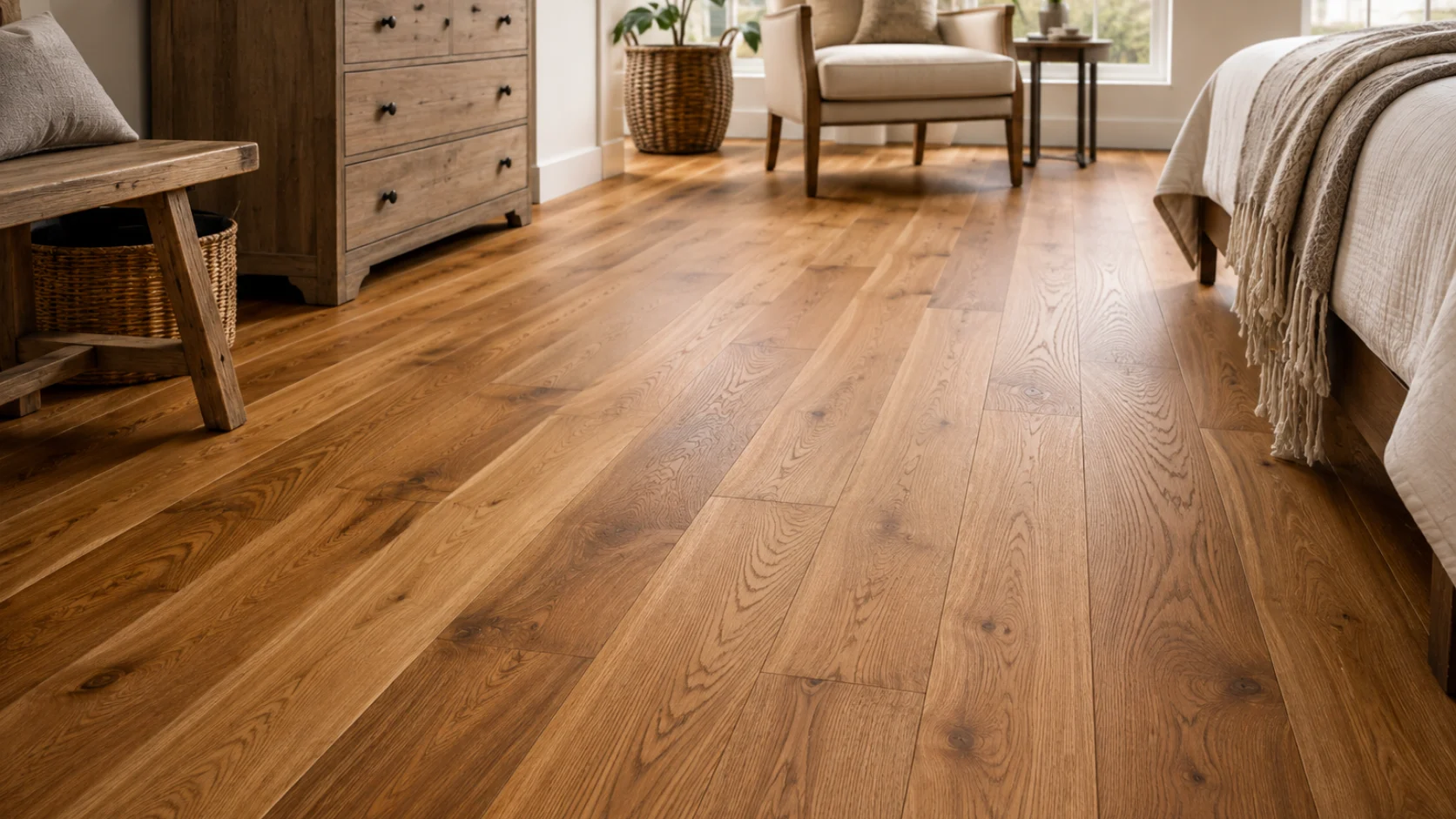
Choosing Custom wood flooring in Dubai isn’t as simple as picking a colour from a brochure. The heat, the air-conditioning, the glass façades that flood rooms with sunlight, and the mix of marble subfloors across villas and apartments all change how a wood floor behaves over time. A floor that looks perfect in a showroom in Poland or Italy can cup, gap, or fade within a year if it isn’t designed for Dubai conditions.
This guide walks through exactly how we design custom wood floors for homes, offices, and retail spaces across Dubai — the decisions that matter, the mistakes we see most often, and what actually drives the cost.
What Makes a Custom Wood Floor Suitable for Dubai?
A custom wood floor in Dubai is designed around four key factors:
wood type, tone and finish, plank pattern, and installation method. These choices should also account for Dubai’s
dry AC-driven air, underfloor cooling, and strong sun exposure.
Expert Tip:
For most Dubai homes and offices, engineered wood flooring offers the best long-term performance. It can be custom-finished in your preferred
tone and pattern while providing better dimensional stability than solid wood in Dubai’s climate.
What “Custom Wood Floors” Actually Means
A custom wood floor isn’t just a floor you pick from a catalogue — it’s one built around your specific room. That includes:
- Wood species and grain (oak, walnut, ash, ipe, ash-grey stains, etc.)
- Tone and stain colour, matched to your furniture, wall colour, and natural light
- Plank size and layout pattern (straight lay, herringbone, chevron, Versailles, basket weave)
- Finish type (matte, oiled, lacquered, brushed, hand-scraped)
- Border details and transitions between rooms or materials
- The wood structure itself — solid wood, or engineered wood built for climate stability
In Dubai, the last point matters more than most suppliers explain upfront, so we’ll start there.
Why Dubai’s Climate Changes the Design Decision
Before choosing a look, it helps to understand what the floor will actually live through:
- Constant AC use pulls moisture out of the air indoors, which can shrink solid wood planks and open gaps between them.
- Underfloor cooling or heating, used in some villas, needs a wood build that tolerates temperature swings without warping.
- Large glass windows and balconies, common in Dubai apartments and villas, expose floors to intense UV — this affects colour fading and finish choice, not just structural stability.
- Marble or screed subfloors are the norm in most UAE buildings, which affects installation method (floating vs glue-down) more than it would in a timber-frame home elsewhere.
This is why engineered wood flooring — a real wood veneer bonded over a stable multi-layer core — is the more reliable base for custom design in Dubai. It takes stain, colour, and pattern just like solid wood, but resists the warping and gapping that solid wood is prone to in air-conditioned interiors. Solid wood still has a place (see the comparison table below), but it needs more careful acclimatisation and maintenance here.
The Custom Design Process, Step by Step
Here’s the process we actually follow with clients designing a floor for their space:
- Understand the space. Room size, natural light direction, ceiling height, existing furniture and wall tones, and whether it’s residential or commercial.
- Choose the wood base. Solid, engineered, or (for very high-traffic or wet-prone commercial areas) SPC/rigid-core with a wood-look finish.
- Select species and tone. Lighter tones (white oak, ash) suit smaller or low-light rooms and read as more spacious; darker tones (walnut, smoked oak) suit larger, well-lit spaces and add warmth to minimalist interiors.
- Pick the pattern. Straight-lay is calmer and works everywhere; herringbone and chevron add visual movement and work well in living areas, hallways, and statement spaces; wide-plank straight lay suits modern villas and open-plan apartments.
- Decide the finish. Matte and oiled finishes hide scratches and dust better (useful with sandy Dubai conditions); lacquered finishes are easier to wipe clean but show scuffs more.
- Plan borders and transitions. Where wood meets marble, tile, or another room, a clean border detail avoids an unfinished look.
- Confirm installation method. Floating installation works well over most UAE subfloors and allows a cleaner, faster fit without major demolition.
Choosing the Right Wood for Your Space
| Factor | Best fit |
|---|---|
| Small apartment, limited natural light | Light oak or ash tones, straight-lay pattern — opens up the space |
| Large villa living/dining area | Wide-plank walnut or smoked oak, herringbone or chevron pattern |
| High-traffic commercial space (office, retail) | Engineered wood or SPC rigid core with a durable lacquered finish |
| Homes with underfloor cooling | Engineered wood only — solid wood is not recommended over underfloor systems |
| Rooms with heavy direct sunlight | UV-resistant finish, mid-to-dark tones (hide fading better than very pale tones) |
| Wet areas near kitchens/entrances | SPC or waterproof engineered flooring with matching wood-look finish |
Solid Wood vs. Engineered Wood vs. SPC — For Custom Design in Dubai
| Solid Wood | Engineered Wood | SPC / Rigid Core | |
|---|---|---|---|
| Climate stability in Dubai | Lower — can shrink/gap with AC dryness | High — built for stability | Very high |
| Customization (species, tone, pattern) | Excellent | Excellent | Good (wood-look designs) |
| Works over underfloor cooling | Not recommended | Yes | Yes |
| Water resistance | Low | Moderate (varies by product) | High |
| Sanding & refinishing later | Multiple times | Limited (thin veneer) | Not applicable |
| Typical best use case | Heritage/statement rooms, low-humidity zones | Most Dubai homes and villas | Commercial, wet areas, rentals |
Design Tips by Room
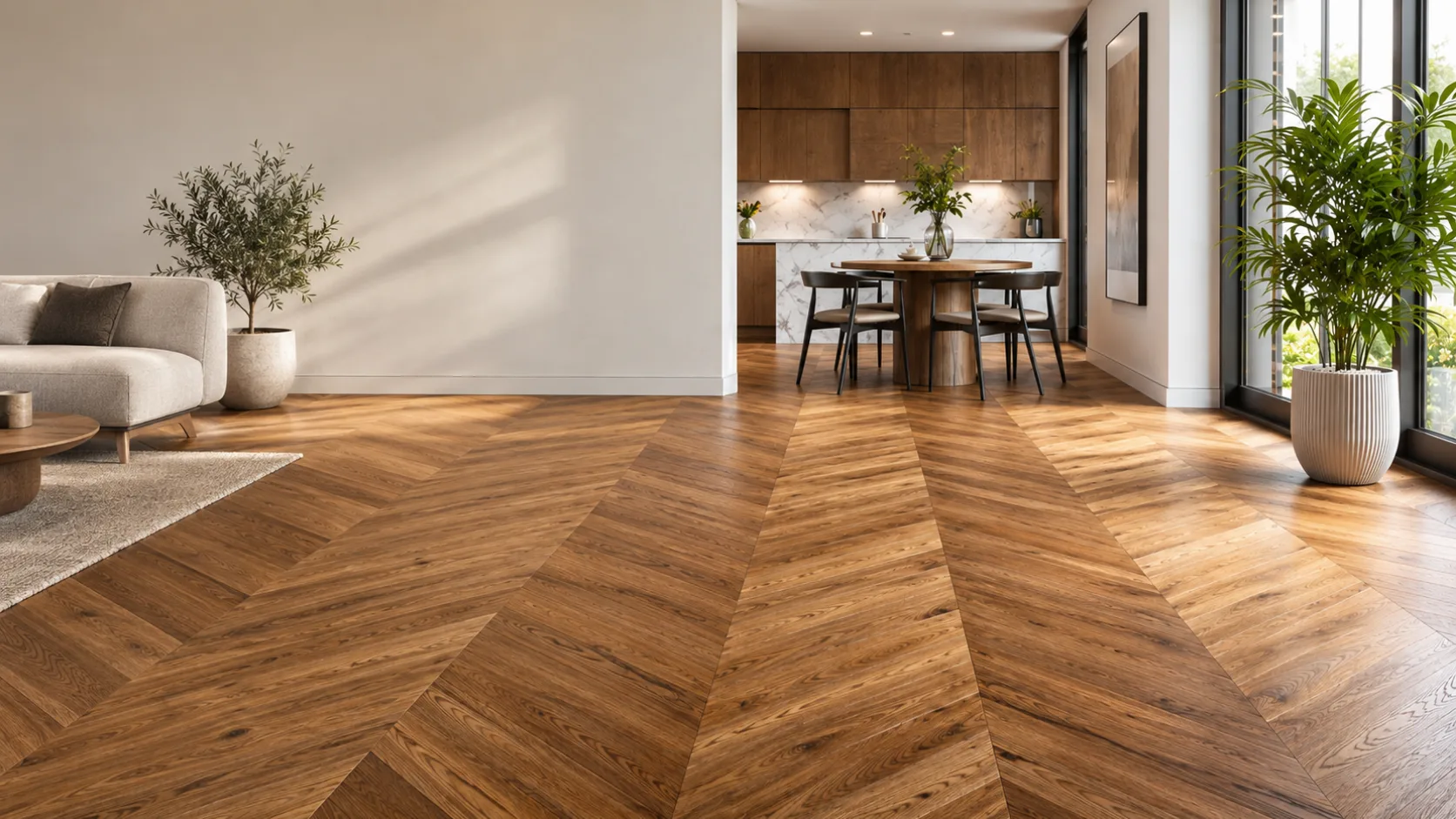
- Living and dining areas: This is where pattern investment pays off most — herringbone or chevron in a mid-tone wood adds character without overwhelming the space.
- Bedrooms: Warmer, softer tones with a matte or oiled finish create a calmer feel underfoot and hide daily dust better.
- Home offices: Straight-lay, wider planks read as clean and professional on video calls and in person.
- Majlis or formal reception areas: Darker, richer tones (walnut, smoked oak) with a border detail signal a more formal, elevated space.
- Kitchens and utility zones: Choose a waterproof engineered or SPC wood-look option rather than solid wood, regardless of how the rest of the home is finished.
What Drives the Cost of a Custom Wood Floor
Exact pricing depends on the product and project size, but these are the factors that move the number most:
- Wood type: Solid wood generally costs more than engineered wood; exotic species cost more than oak or ash.
- Pattern complexity: Herringbone and chevron require more cutting and labour than straight-lay, which increases both material wastage and installation time.
- Plank width and length: Wider, longer planks usually cost more per square metre than standard sizes.
- Finish type: Hand-scraped or specially oiled finishes cost more than standard lacquered finishes.
- Subfloor preparation: Levelling an uneven screed or removing old flooring adds to the project cost.
- Area and access: Larger continuous areas are more cost-efficient per square metre than broken-up, multi-room layouts with lots of borders and transitions.
For an accurate quote, a site visit or floor plan review is the only reliable way to price a custom design — anyone quoting a fixed per-sqft rate without seeing the space or pattern complexity is giving a rough estimate at best.
Common Mistakes to Avoid
- Choosing solid wood for a home with underfloor cooling — this almost always leads to warping within a year or two.
- Picking a tone from a small sample under showroom lighting — Dubai’s natural light is much brighter and warmer; always view samples in the actual room, at different times of day.
- Ignoring the pattern’s visual scale — a busy herringbone pattern in a small room can make it feel cluttered rather than elegant.
- Skipping acclimatisation — wood flooring (especially solid wood) needs to adjust to indoor temperature and humidity before installation; skipping this step is a leading cause of gapping.
- Not planning transitions in advance — where wood meets marble or tile should be decided at design stage, not left for the installation team to improvise.
- Choosing based on price alone — the cheapest per-sqft rate often means a thinner wear layer or lower-grade core, which shows within a few years of Dubai’s climate.
Maintenance Tips for Custom Wood Floors in Dubai
- Use a slightly damp (not wet) mop — standing water is the biggest risk to any wood floor, including engineered options.
- Maintain moderate indoor humidity where possible; extreme AC-driven dryness accelerates gapping over time.
- Use felt pads under furniture legs and door mats at entrances to reduce grit-related scratching from sand and dust.
- Avoid direct, prolonged sun exposure on one area — rotate rugs occasionally on light-toned floors to prevent uneven fading.
- Schedule periodic sanding and polishing for solid wood, or manufacturer-recommended cleaning products for engineered and lacquered finishes.
How to Choose the Right Wood Flooring Dubai Supplier
Not every wood flooring Dubai supplier designs floors the same way. When comparing wood floor suppliers, ask:
- Do they offer engineered wood built specifically for GCC climate conditions, or standard European stock only?
- Can they show real completed projects in Dubai villas, apartments, or commercial spaces — not just manufacturer catalogue images?
- What warranty do they offer, and does it cover the product, the installation, or both?
- Do they handle design, supply, and installation as one process, or do you need to coordinate multiple contractors?
- Do they offer on-site consultation to assess your specific room, light, and subfloor before recommending a product?
Floor Concepts has been designing and installing custom wood floors across Dubai villas, apartments, offices, and hospitality projects for over a decade, sourcing from established European manufacturers with wood engineered for climate stability, and backing installations with warranties of up to 30 years.
Frequently Asked Questions
Can I fully customize my wood floor design in Dubai?
Yes. You can choose the wood species, tone/stain colour, plank size, pattern (straight-lay, herringbone, chevron, and more), and finish type to match your space and interior style.
Is solid wood or engineered wood better for Dubai homes?
Engineered wood is generally the better choice for most Dubai homes because it resists the shrinking and gapping that solid wood can experience with constant air-conditioning and low indoor humidity. Solid wood can still work well in specific, lower-humidity-risk settings with proper acclimatisation and maintenance.
Can custom wood flooring be installed over underfloor cooling systems?
Engineered wood is suitable for use over underfloor cooling systems; solid wood is generally not recommended in this setup, as temperature swings can cause warping.
How long does it take to design and install a custom wood floor?
Timelines vary by project size and pattern complexity, but typically include a design consultation, a proposal and sample approval stage, order and delivery lead time, and installation — a straightforward residential room can often be completed faster than a full villa with complex herringbone or chevron patterns throughout.
What is the best wood flooring pattern for a small apartment?
Straight-lay planks in a lighter tone (such as white oak or ash) generally suit smaller apartments best, as they create a more spacious, uninterrupted look compared to busier patterns like herringbone.
How do I maintain a custom wood floor in Dubai’s climate?
Clean with a slightly damp mop rather than a wet one, use furniture pads and entrance mats to limit grit and sand damage, try to maintain moderate indoor humidity, and avoid leaving one area exposed to intense direct sunlight for long periods.
Does Floor Concepts offer a warranty on custom wood flooring?
Yes, Floor Concepts offers manufacturer warranties of up to 30 years on flooring products, along with a defects liability period on installation work.
Can Floor Concepts design wood flooring for both residential and commercial projects?
Yes. Floor Concepts designs and installs custom wood flooring for villas, apartments, offices, retail spaces, and hospitality projects across Dubai and the wider UAE.
Get a Design Consultation
If you’re planning custom wood floors for a villa, apartment, office, or commercial space in Dubai, the best next step is a site consultation — not a catalogue browse. Floor Concepts’ team will assess your space, light, and subfloor, and recommend the wood, tone, and pattern that will genuinely hold up in your home.