
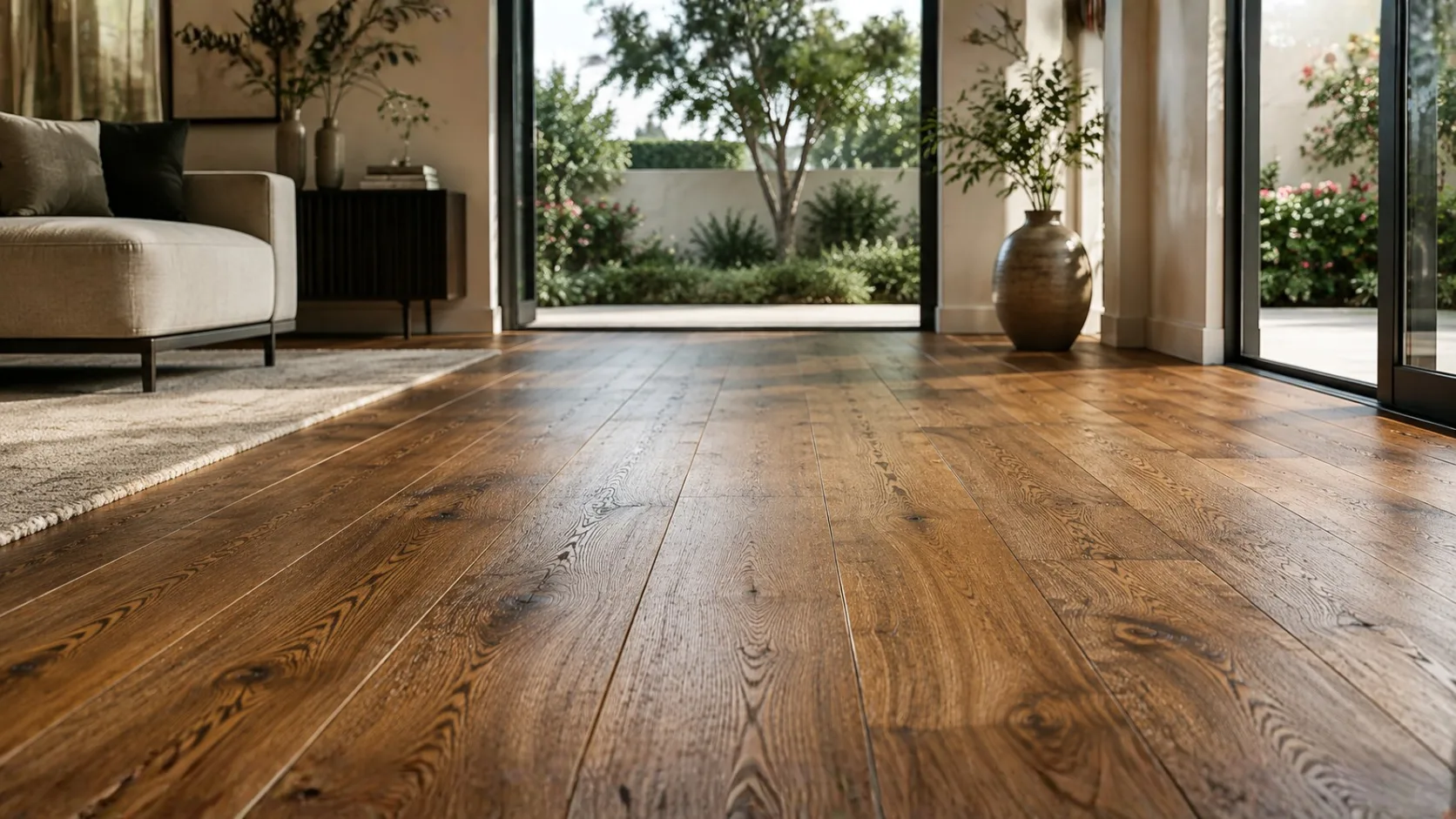
If you’ve searched for solid wood flooring Dubai, you’ve probably already come across two extreme opinions: people who swear it’s the best investment they’ve made, and people who say it warped within a year and they regret it. Both are telling the truth about their own floor — they just had very different installations, wood species, and living habits.
At Floor Concepts, we’ve installed, repaired, and re-sanded solid wood floors across villas in Arabian Ranches, Emirates Hills, and Jumeirah, as well as apartments along Sheikh Zayed Road and Dubai Marina, for years. This guide is based on what we actually see when we walk back into those homes five years later — not on theory.
What Happens to Solid Wood Flooring After 5 Years in Dubai?
With the right species, correct acclimatization, and stable indoor humidity (40–55%), solid wood flooring in Dubai typically performs well for 5+ years, needing only a re-oil or a light sand-and-polish around year 3–5.
Without humidity control or proper installation, most solid wood floors can show gaps, cupping, or edge lifting within 12–24 months. The difference is almost never the wood itself — it is the installation quality and the AC habits of the home.
Expert Tip:
For Dubai properties, proper acclimatization, moisture testing, expansion allowances, and consistent air-conditioning are essential for maintaining solid wood flooring over the long term.
Why Dubai’s Climate Is the Real Test for Wood Flooring
Solid wood is a natural, hygroscopic material — it absorbs and releases moisture from the air. That’s fine in a climate with stable humidity. Dubai isn’t that climate.
- Outdoor humidity regularly swings between roughly 20% in peak summer heat and 80%+ during humid coastal months.
- Indoor air conditioning strips moisture out of the air, often pushing indoor relative humidity below 30% when the AC runs constantly.
- The gap between “AC on all day” and “AC off during a holiday” can shift indoor humidity by 20–30 points in a matter of days.
This is the single biggest factor behind every review you’ve read about hardwood flooring Dubai performance — good or bad. Wood doesn’t fail because of heat alone; it fails because of rapid, repeated swings in moisture content.
The Realistic 5-Year Timeline
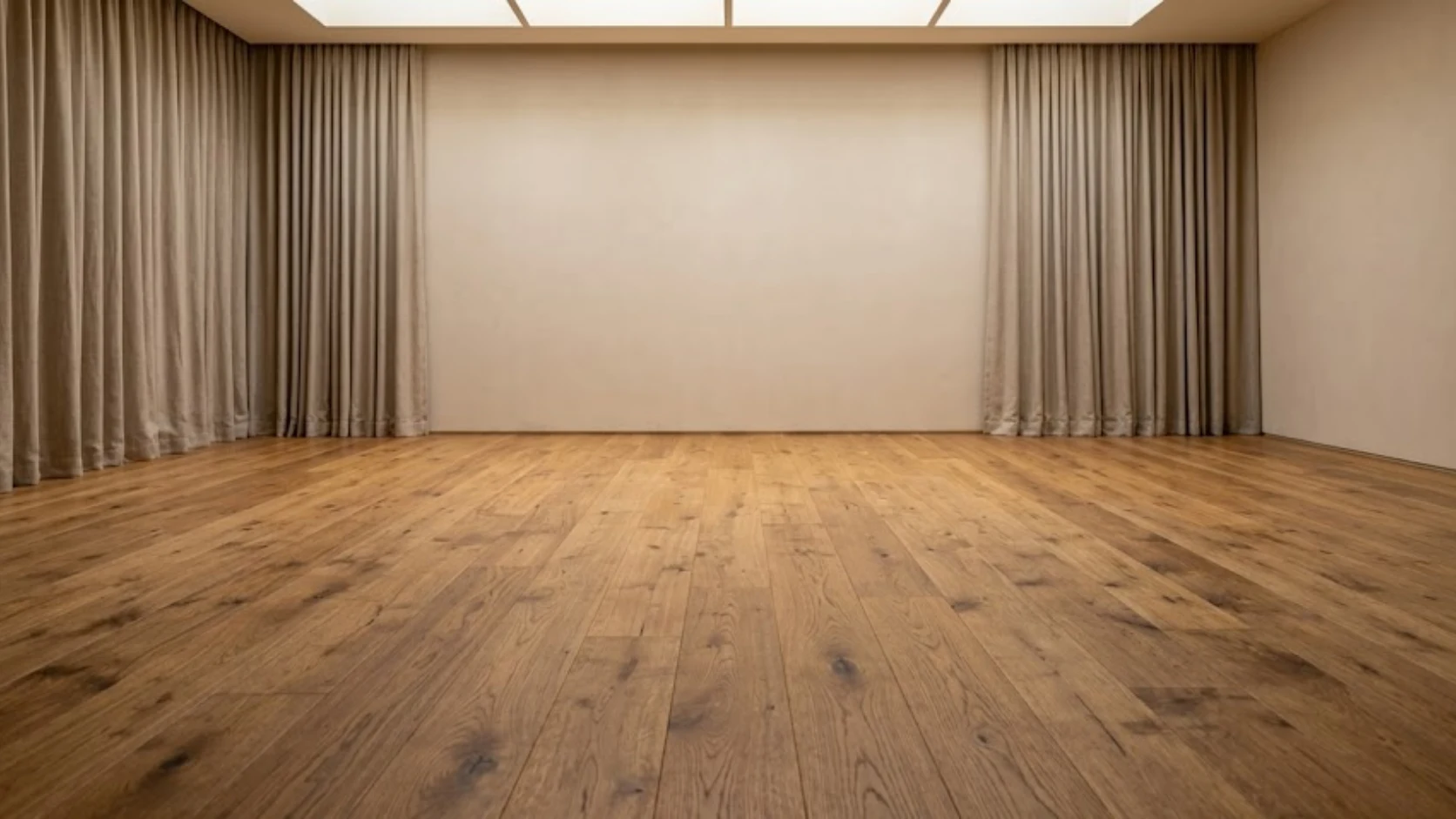
Here’s what we genuinely see, broken down by stage, based on floors installed correctly by a professional wood flooring company Dubai homeowners trust — not worst-case DIY jobs.
Year 1: The Settling-In Period
Expect very minor, mostly invisible movement. Boards may show tiny seasonal gaps (under 1–2mm) between peak summer and cooler winter months as the wood equilibrates to your home’s specific humidity pattern. This is normal and expected with any solid wood floor, anywhere in the world — Dubai just makes it happen faster because the seasonal swing is more extreme.
Years 2–3: The Real Indicator Period
By now, the floor has “learned” your home’s humidity rhythm. If gaps from Year 1 have stabilized and aren’t widening, the installation was done correctly and the floor will likely perform well long-term. This is also when the finish (oil or lacquer) starts showing light traffic wear in high-footfall zones — kitchens, hallways, entryways.
Year 5: The Point Most People Search This Question
This is the milestone most homeowners are really asking about. On a well-installed, well-maintained wooden flooring Dubai project, Year 5 typically looks like:
- Surface finish visibly duller in high-traffic paths, but the wood underneath is intact
- Minor, stable seasonal gapping (unchanged from Year 2–3)
- Possible light cupping at balcony doors or near large glass windows with direct sun exposure
- Color has warmed or darkened slightly (natural UV oxidation, especially with oak and walnut)
On a poorly installed or poorly maintained floor, Year 5 usually looks like:
- Visible board separation of 3mm or more
- Cupping or crowning across multiple boards, not just isolated ones
- Cracking near AC vents or under direct sun exposure
- Finish failure allowing moisture to reach bare wood
Years 5–10+: Long-Term Outlook
This is where solid wood earns its reputation as a long-term investment. Unlike laminate or vinyl, a solid wood floor can be sanded and re-finished multiple times over its life — something no other flooring category in this comparison can do. A floor sanding and polishing service around year 5–8 typically restores it to near-new condition, extending its usable life by another 8–10 years per refinish.
What Actually Determines the Outcome (More Than the Wood Itself)
We’ve refinished floors from the same supplier, same species, installed in the same community, with completely different outcomes five years later. The variables that matter most:
- Acclimatization before installation — Wood needs to sit in the actual room, unboxed, for several days so it adjusts to your home’s specific humidity before it’s fixed to the floor. Skipping this step is the single most common cause of early gapping and cupping we see on solid wood flooring installation call-backs.
- Expansion gaps at the perimeter — A professional installer leaves a small gap at the walls (hidden by skirting) so the wood has room to expand. Without it, boards have nowhere to go but up (cupping/buckling).
- Subfloor moisture barrier — Concrete slabs in Dubai can carry residual moisture, especially in newer builds. A proper moisture barrier under the floor prevents this moisture from migrating into the wood from below.
- Indoor humidity habits — Homes that run AC on a consistent, moderate setting (rather than switching it off for weeks during travel, then blasting it) see far less movement than homes with erratic AC use.
- Sun exposure — Boards directly under floor-to-ceiling glass without UV film or curtains dry out and fade faster than the rest of the room.
- Species selection — Denser, more dimensionally stable species handle Dubai’s swings noticeably better than soft, high-movement species.
Best Solid Wood Species for Dubai Homes
| Species | Stability in Dubai’s Climate | Best Use |
|---|---|---|
| Teak | Excellent — natural oils resist moisture movement | Villas, high-traffic living areas |
| Oak (European/American) | Good — widely used, moderate movement, refinishes well | Bedrooms, living rooms |
| Merbau | Very good — dense and naturally moisture-resistant | Formal living areas, studies |
| Walnut | Moderate — beautiful but softer and more sensitive to swings | Low-traffic feature rooms only |
| Iroko | Very good — often used as a teak alternative | Villas, high-humidity zones |
Solid Wood vs. Engineered Wood: An Honest Comparison
Both materials can look identical once installed. The difference shows up in how they behave over the years — which is exactly what this guide is about.
| Factor | Solid Wood Flooring | Engineered Wood Flooring |
|---|---|---|
| Dimensional stability in Dubai’s climate | Moderate — needs humidity control | High — cross-layered core resists movement |
| Refinishing (sand & polish) | Multiple times over its life | Limited by veneer thickness (1–3 times) |
| Best for | Villas with stable indoor climate, low-traffic formal rooms | Apartments, homes with variable AC use, underfloor cooling |
| Upfront cost | Higher | Moderate |
| Long-term lifespan with care | 25+ years | 15–25 years |
| Installation sensitivity | High — acclimatization and gaps are critical | Lower — more forgiving of minor humidity swings |
Both are genuinely good choices — the right one depends on your home’s humidity consistency, not on which material is “better” in the abstract. If your household travels often and the AC gets switched off for weeks at a time, engineered wood is usually the safer recommendation. If you maintain steady indoor conditions and want a floor you can refinish for decades, solid wood remains an excellent, long-term investment.
Maintenance Schedule to Get the Full 5+ Years
- Weekly: Dry mop or vacuum with a hard-floor setting — never a beater-bar vacuum head, which scratches the finish.
- Monthly: Damp-mop (barely damp, never wet) with a pH-neutral wood floor cleaner. Standing water is the fastest way to damage solid wood.
- Every 6 months: Check and top up felt pads under furniture; check for early gapping near AC vents and windows.
- Year 1–2: Monitor indoor humidity with a simple hygrometer. Aim to keep it between 40–55%; a small humidifier in peak summer helps in very dry, AC-heavy homes.
- Year 3–5: Book a professional inspection. Light traffic-lane wear can usually be addressed with a maintenance coat rather than a full sand-down.
- Year 5–8: Full sand and polish (or re-oil, depending on finish type) to restore the surface and extend the floor’s life by another decade.
Common Mistakes We See in Dubai Homes
- Installing wood the same day it’s delivered, without acclimatization
- Skipping the moisture barrier on ground-floor concrete slabs
- Wet mopping as a regular cleaning method
- Switching the AC off for extended holidays without any humidity buffer
- Placing solid wood in bathrooms, near pools, or in direct entryway rain exposure — this is where SPC or vinyl flooring is the smarter choice
- Choosing a soft, high-movement species for a sun-facing living room
Buying and Installation Advice From Floor Concepts
If you’re comparing quotes for solid wood flooring installation in Dubai, ask every supplier these three questions before you sign anything:
- How long will the wood acclimatize on-site before installation?
- What moisture barrier is included for the subfloor?
- What’s covered under the installation warranty, separate from the manufacturer’s product warranty?
At Floor Concepts, every project includes a manufacturer product warranty plus a 1-year installation defects liability period, so any issue traced back to workmanship — not humidity or maintenance — is covered. We also provide free consultations and samples so you can see how a species performs in your actual lighting and room conditions before committing.
The Bottom Line
Five years in, a solid wood floor in Dubai should look lived-in, not damaged. Light finish wear and minor seasonal movement are normal; visible gapping, cupping, or cracking usually points back to installation shortcuts, not the wood itself. Choose the right species, insist on proper acclimatization and a moisture barrier, and keep indoor humidity reasonably steady, and wood flooring Dubai homeowners can expect a floor that still has decades of life left in it.
Looking for honest, experience-based advice on wood flooring Dubai before you buy? Book a free consultation with Floor Concepts — we’ll help you choose between solid and engineered wood based on your actual home, not a generic recommendation.
Frequently Asked Questions
Is solid wood flooring a good option for Dubai homes?
Yes, with the right species and consistent indoor humidity control. Solid wood flooring Dubai installations perform very well in villas and homes with stable AC use, and can be refinished multiple times over 25+ years.
Does solid wood flooring warp in Dubai’s climate?
It can, but warping is usually caused by installation shortcuts — skipped acclimatization, no expansion gap, or no moisture barrier — rather than the wood itself. Correctly installed floors show only minor, stable seasonal movement.
How long does solid wood flooring last in Dubai?
With proper care and periodic sanding and polishing, 25 years or more is realistic. The wood itself typically outlasts the finish, which is why refinishing every 8–10 years matters more than replacing.
Is solid wood or engineered wood better for Dubai apartments?
For apartments with variable AC schedules or underfloor cooling, engineered wood flooring is usually the more forgiving choice. Solid wood suits villas and homes where indoor humidity stays consistent year-round.
How much does solid wood flooring installation cost in Dubai?
Costs vary by species, board width, and finish, generally sitting above engineered wood and well above laminate or vinyl. A free consultation and sample viewing is the most reliable way to get an accurate, room-specific quote.
Can solid wood flooring be installed over underfloor cooling in Dubai?
It’s possible with select species and careful moisture management, but engineered wood is generally the safer, more stable choice over underfloor cooling systems.
Pingback: Best Flooring for Kids Rooms in Dubai: Safety & Hygiene