
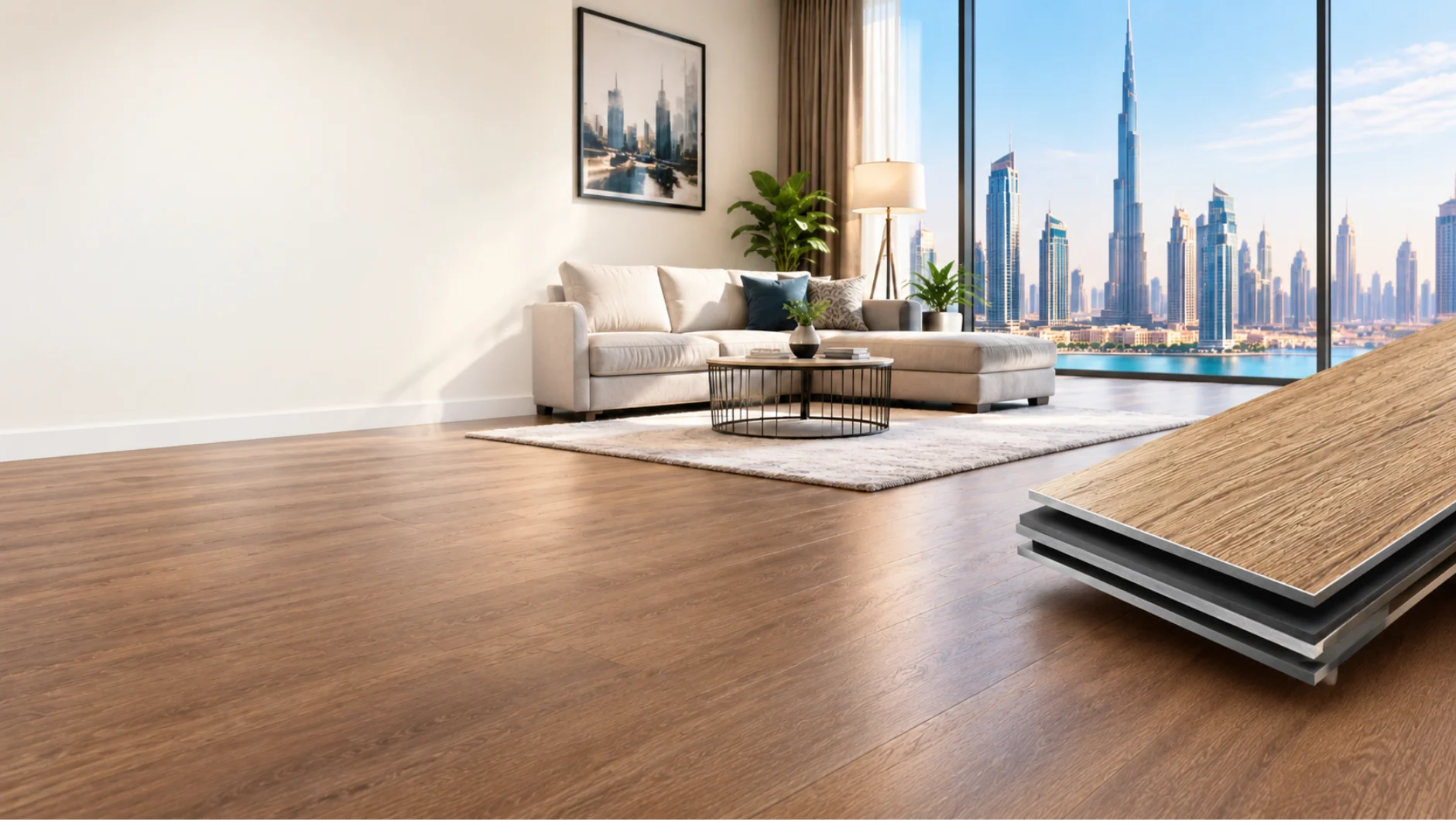
If you’re comparing flooring options for a Dubai home or office, you’ve probably already seen the warranty claims — “20 year warranty,” “25 year warranty,” sometimes even “lifetime.” What most of those numbers don’t tell you is how a floor actually performs once it’s dealing with real Dubai conditions: sun pouring through floor-to-ceiling glass, sand tracked in from a garden or the beach, a new-build subfloor that hasn’t fully cured, and years of daily foot traffic.
SPC Flooring Dubai buyers deserve a straight answer, not a marketing number. This guide breaks down what genuinely determines how long SPC flooring lasts in this climate, the specific wear factors unique to Dubai homes, and how to buy and maintain it so your floor lands at the long end of its lifespan — not the short end.
How Long Does SPC Flooring Last in Dubai?
In a typical Dubai home, good-quality SPC flooring can last 15 to 25 years. Its lifespan depends mainly on the
wear-layer thickness, direct sun exposure, foot traffic, and whether it is installed correctly over a properly prepared subfloor.
Entry-Level SPC:
A 0.3mm wear layer in a busy family home may begin showing noticeable wear within
10–12 years.
Expert Tip:
Premium SPC with a 0.5–0.7mm wear layer and
UV-stable coating, installed by an experienced team, can perform well beyond
20 years — even in Dubai villas exposed to heavy natural light.
What Actually Determines How Long SPC Flooring Lasts
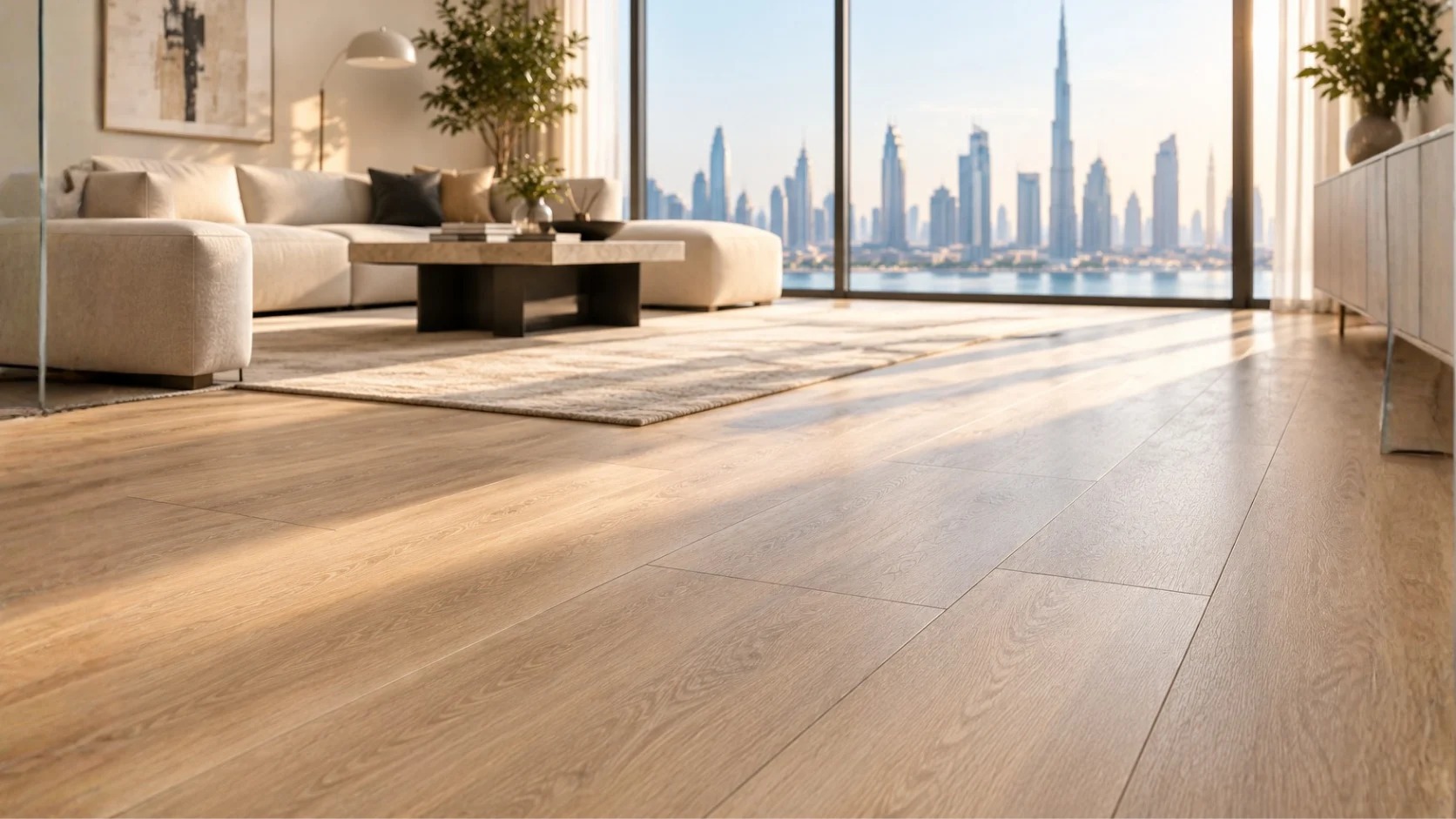
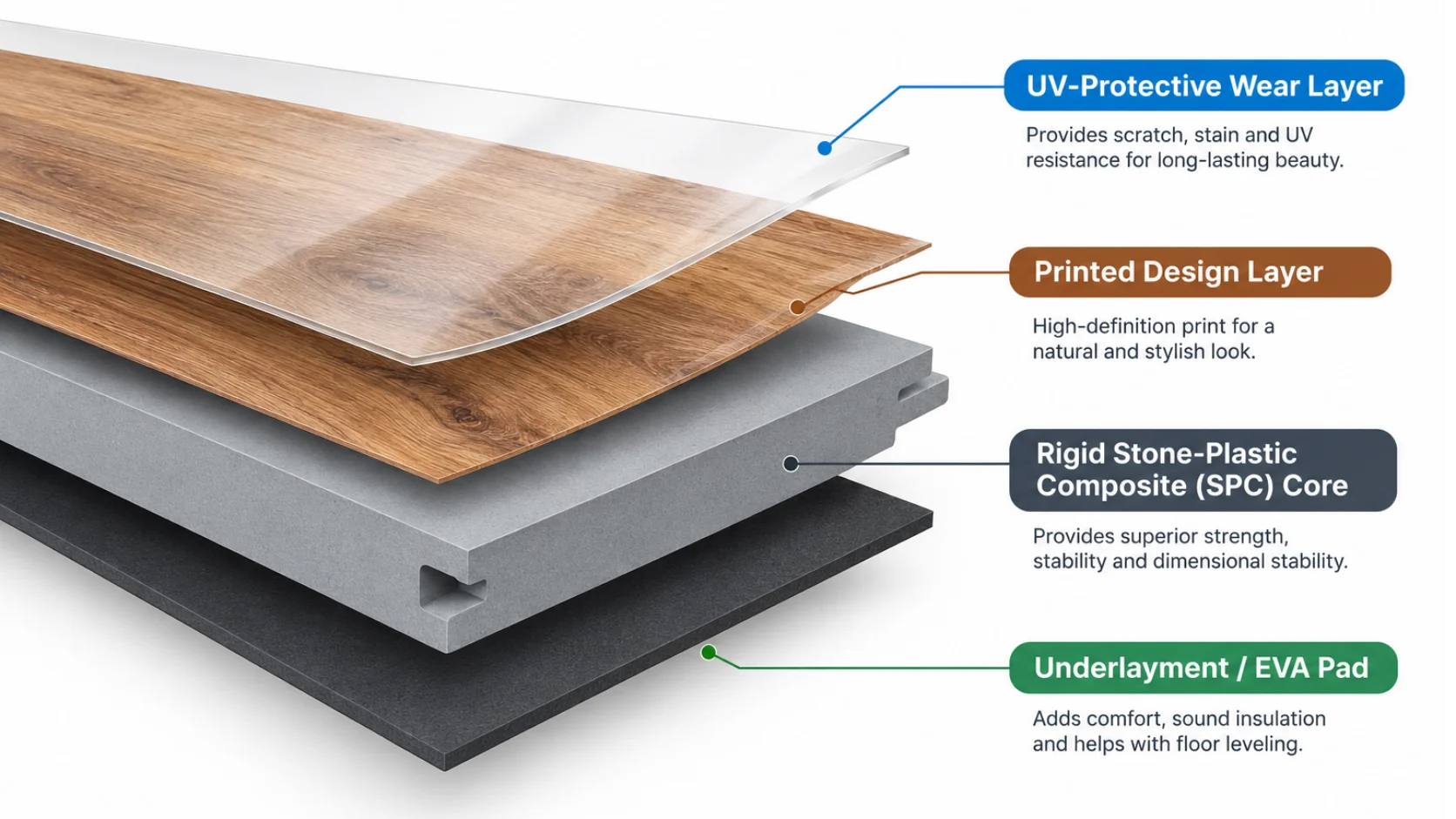
SPC — Stone Plastic Composite — is a type of rigid core flooring. Its core is pressed from limestone powder, PVC, and stabilizers under heat and pressure, topped with a printed design layer and a clear protective wear layer. That rigid core is what makes SPC dimensionally stable: unlike laminate or solid timber, it doesn’t swell, shrink, or bow with temperature swings, which already gives it an advantage in a climate that runs from 45°C+ outdoor heat to cold, dry, AC-conditioned interiors for most of the year.
But “the core doesn’t move” is only half the lifespan story. Three things decide how long any specific SPC floor will actually last:
- Wear layer thickness — the clear top layer that resists scratches, scuffs, and UV fading. This is the part that physically wears through over time, and it is the single biggest lifespan variable.
- Traffic and use pattern — a guest bedroom, a family kitchen, and a home gym wear at very different rates even with identical flooring.
- Installation quality and subfloor condition — a beautifully specced SPC floor installed on an unlevelled or damp subfloor can fail in months, regardless of its rated warranty.
Realistic Lifespan by Wear Layer (Not Just the Warranty Number)
Warranty length and real-world lifespan are related but not identical — a warranty covers manufacturing defects and rated wear-through under normal residential use; it doesn’t account for Dubai-specific stressors like sun exposure through floor-to-ceiling glass or sand tracked in from a garden or beach day. Here’s a more honest, traffic-adjusted view:
| Wear Layer Thickness | Typical Warranty | Realistic Lifespan — Moderate Dubai Home Traffic | Realistic Lifespan — Heavy Traffic / Direct Sun Areas |
|---|---|---|---|
| 0.3mm (12 mil) — entry-level | 10–12 years residential | 10–15 years | 7–10 years |
| 0.5mm (20 mil) — mid-range | 15–20 years residential | 15–20 years | 12–15 years |
| 0.7mm+ with UV/ceramic-bead coating — premium | 20–25+ years residential, up to 10 years commercial | 20–25 years | 15–20 years |
A well-specified, correctly installed SPC Flooring Dubai project sits comfortably in the 15–25 year bracket for most homes. Commercial spaces — retail units, offices, clinics — see faster wear and typically carry 5–10 year commercial warranties even on premium ranges, because footfall volume is the dominant factor, not the climate.
Dubai-Specific Factors That Shorten (or Extend) SPC Flooring Life
This is the part most flooring guides skip, and it’s the part that actually matters if you live here.
1. Direct sun through glass facades and balcony doors
Dubai apartments and villas often have large glazed areas. SPC near west- or south-facing windows and sliding balcony doors takes far more UV and heat exposure than the rest of the room. Over years, this can cause localized fading, sheen changes, or — with lower-quality wear layers — slight brittleness at the exposed strip. Premium ranges with UV-stable or ceramic-bead-reinforced wear layers resist this far better. If you can’t avoid a sun-drenched area, ask your supplier specifically about UV performance before buying, or add UV-filtering window film/curtains.
2. Sand, grit, and outdoor dust
Villas with gardens, pools, or direct outdoor access — and apartments near construction-heavy areas — deal with fine sand and dust being tracked indoors regularly. Sand acts like sandpaper under shoes and furniture legs, accelerating wear-layer scratching faster than in a typical Western home. A simple entrance mat and “shoes off” habit meaningfully extends floor life here.
3. New-build subfloor moisture
Many Dubai handover units have concrete screed that hasn’t fully cured, especially in new developments. SPC is waterproof, but installing over a subfloor with residual moisture and no moisture barrier can still cause adhesive or click-joint issues over time in glue-down applications, and can trap moisture that affects the subfloor itself. A moisture test before installation is standard practice with an experienced flooring installation Dubai team and should never be skipped on new handovers.
4. AC-driven dryness (a non-issue for SPC, unlike wood)
One thing that does not meaningfully affect SPC: the low humidity created by constant air conditioning. This is a common source of cracking and gapping in solid hardwood and even some laminate in Dubai homes, but SPC’s rigid composite core is essentially unaffected by humidity swings — one of its genuine advantages over timber in this market.
5. Furniture, rolling loads, and point pressure
Heavy furniture dragged across the floor, unprotected chair casters, and gym or home-office equipment concentrate pressure on small areas and can dent or scratch even a good wear layer. Felt pads and proper floor protectors under furniture legs are cheap insurance.
6. Installation quality
This deserves its own section below, because it’s the most under-discussed cause of early SPC failure in the UAE.
The Biggest Cause of Early SPC Failure: Installation, Not the Product
In our experience supplying and installing flooring across Dubai homes and commercial fit-outs, the majority of “my SPC floor failed early” complaints trace back to installation, not the material itself. Common failure points:
- Unlevelled subfloor — SPC planks click together at the edges. If the subfloor has dips or high spots, the joints take uneven stress every time someone walks across them, and joints can eventually separate or “peak.”
- Skipping acclimatization — SPC should sit in the room it will be installed in for at least 24–48 hours before fitting, so the material settles to the room’s actual temperature and humidity. Skipping this step increases the risk of slight movement after installation.
- No expansion gap — even though SPC is far more stable than wood or laminate, manufacturers still specify a small expansion gap at walls and fixed obstacles. Installers who ignore this risk buckling in large, continuous runs, particularly in sun-exposed rooms.
- Wrong underlay or none at all — the wrong underlay (or skipping it to cut cost) undermines sound insulation and can affect how evenly the floor takes load over time.
This is why the company doing your flooring installation Dubai work matters as much as the plank you choose. A reputable, experienced team will moisture-test the subfloor, level it where needed, acclimatize the material, and follow manufacturer spacing guidelines — steps that are easy to skip and impossible to verify once the floor is down and looking good on day one.
Signs Your SPC Floor Is Reaching the End of Its Life
- Visible wear-through of the printed design layer (not just surface scuffing) in high-traffic paths
- Persistent, growing gaps at plank joints that don’t close after temperature stabilizes
- Noticeable fading or sheen mismatch in sun-exposed areas compared to shaded areas
- Soft spots, movement, or a “hollow” sound when walking, suggesting subfloor or click-joint failure
- Lifting edges near doorways or wet zones (kitchens, entryways)
Surface scuffs, minor scratches, and dulled sheen are normal cosmetic wear and don’t mean the floor is failing — they’re usually solvable with the right cleaning products or a light polish, not replacement.
How to Extend the Life of Your SPC Flooring in Dubai
- Use doormats at every entry point — this single habit removes most of the sand and grit that causes premature scratching.
- Sweep or vacuum (soft brush head) regularly, then damp-mop with a pH-neutral cleaner made for vinyl/SPC — avoid steam mops and bleach-based or ammonia-heavy products, which degrade the wear layer’s protective coating over time.
- Add felt pads under furniture legs and use proper protectors under office chairs with casters.
- Manage direct sun exposure in glazed rooms with UV window film or curtains during peak hours, especially in west-facing rooms.
- Wipe spills promptly, particularly at kitchen and bathroom thresholds where standing liquid can work into joints over years.
- Avoid dragging heavy furniture — lift and carry, or use furniture sliders.
- Schedule an annual deep clean with products approved for your specific SPC range, not generic supermarket floor cleaners.
Common Buying Mistakes to Avoid
- Choosing purely on price per square meter without checking wear layer thickness — this is the single biggest predictor of how long the floor will actually look good.
- Ignoring the installer’s process — ask specifically whether they moisture-test and level the subfloor before quoting a fixed price.
- Assuming all “waterproof” claims are equal — waterproof core doesn’t mean the joints are sealed against standing water indefinitely; wipe spills regardless.
- Not asking about UV performance for sun-facing rooms with large windows — a common Dubai-specific oversight.
- Skipping samples — SPC colors and textures can look different under Dubai’s natural light versus a showroom’s lighting; always view a physical sample in the actual room.
- Assuming all suppliers offer the same warranty terms — commercial versus residential warranty coverage varies significantly between flooring companies in Dubai, so confirm exactly what’s covered in writing.
SPC vs. Other Flooring Types: Lifespan Comparison for Dubai Homes
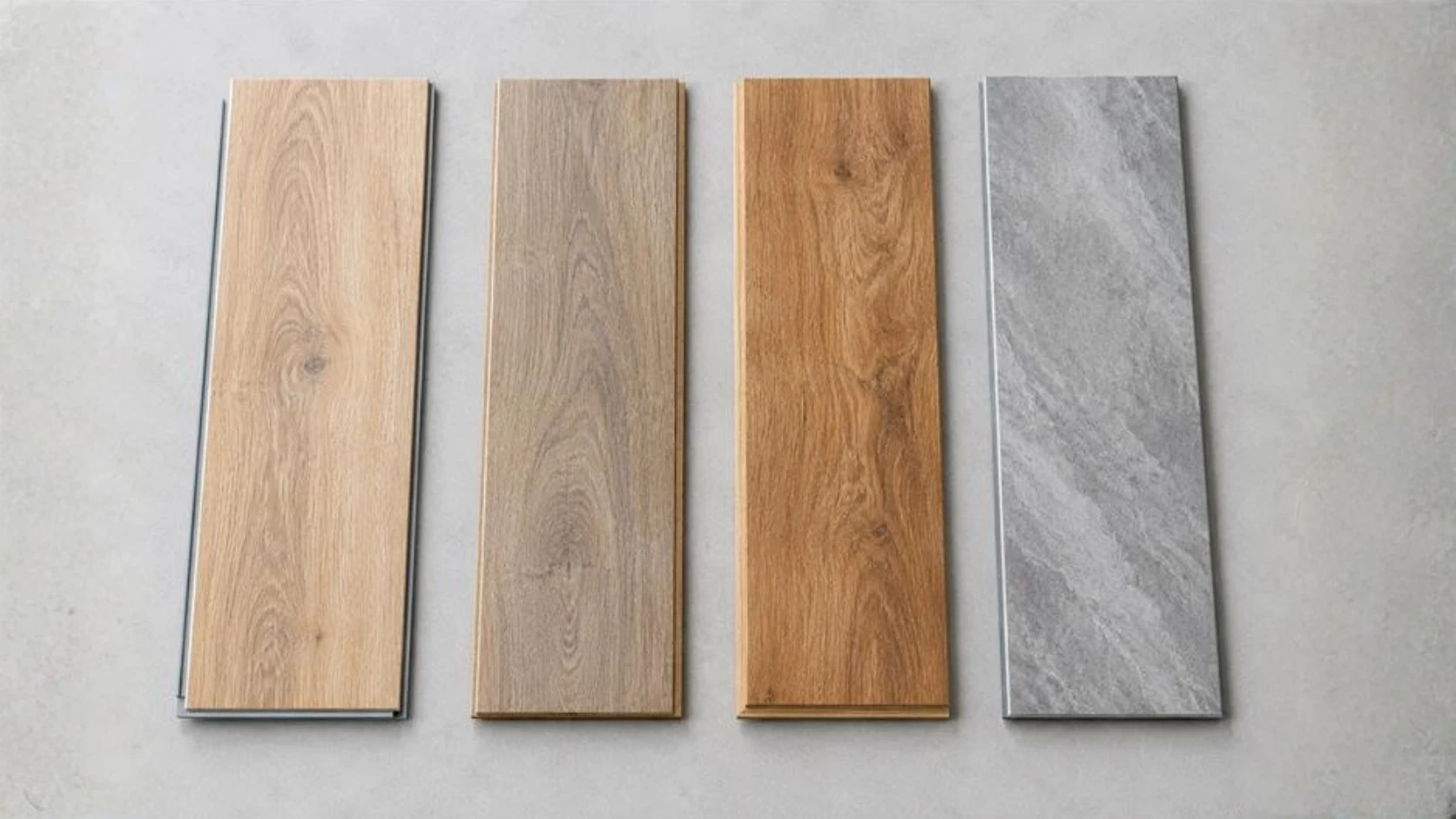
| Flooring Type | Typical Lifespan in Dubai | Handles Dubai Heat/Sun | Handles Moisture/Wet Areas | Maintenance Level |
|---|---|---|---|---|
| SPC / Rigid Core | 15–25 years | Excellent — dimensionally stable | Excellent — waterproof core | Low |
| Laminate Flooring | 8–15 years | Moderate — can peak/gap with heat | Poor — swells with moisture | Low–Medium |
| Engineered Wood | 20–30 years (with refinishing) | Good, but sensitive to direct sun fading | Moderate — needs humidity control | Medium |
| Solid Hardwood | 30+ years (with refinishing) | Fair — AC dryness risks cracking/gapping | Poor | High |
| Standard Vinyl (LVT/sheet) | 10–20 years | Good | Excellent | Low |
| Homogeneous Vinyl (commercial) | 15–20 years (heavy commercial use) | Excellent | Excellent | Low–Medium |
For most residential Dubai homes weighing vinyl flooring Dubai options against timber, SPC sits in a strong middle ground: near-hardwood good looks, near-zero sensitivity to the region’s heat and AC-driven dryness, and full waterproofing — without hardwood’s periodic refinishing cost or laminate’s moisture vulnerability.
Buying Advice: What to Ask Before You Choose SPC Flooring Dubai-Wide
When comparing quotes from different flooring Dubai suppliers, ask each one:
- What is the exact wear layer thickness (in mm, not just “premium” or “standard”)?
- What is the core thickness, and is it suitable for both residential and light commercial use if needed?
- Does the wear layer include UV or ceramic-bead protection for sun-exposed rooms?
- What subfloor preparation and moisture testing is included in the installation quote?
- What does the warranty actually cover — manufacturing defects only, or wear-through too?
- Can you provide a physical sample to view in the actual room’s lighting?
- What is the installation team’s experience with villas versus apartments, since subfloor conditions differ significantly between the two?
Working with an established, experienced best flooring company in Dubai — one that supplies the material and controls the installation quality — removes most of the risk in that list, since responsibility for both the product and the fit sits with one accountable team.
The Bottom Line
SPC Flooring Dubai buyers who choose a mid-to-premium wear layer, use an experienced installer who properly preps the subfloor, and follow basic maintenance can reasonably expect 15–25 years of solid performance — genuinely one of the better lifespan-to-cost ratios available for the region’s climate. The floors that disappoint are almost always let down by thin wear layers bought on price alone, or by installation shortcuts on subfloor prep — not by the material itself.
If you’re planning a renovation or new-build fit-out and want a wear layer and installation plan matched to your specific rooms — including sun exposure and traffic levels — Floor Concepts offers free samples, a site consultation, and supply-and-install service across Dubai and the wider UAE.
Frequently Asked Questions
Does SPC flooring work with underfloor heating in Dubai homes?
Most SPC flooring is compatible with low-temperature underfloor heating (check the manufacturer’s maximum surface temperature rating first), though underfloor heating is uncommon in Dubai residential builds. It is not compatible with underfloor cooling systems that create excess surface condensation without proper vapor management.
Is SPC flooring suitable for kitchens and bathrooms in Dubai?
Yes. SPC’s core is fully waterproof, making it a strong choice for kitchens, bathrooms, and utility areas — provided installation includes proper sealing at wet-zone edges and thresholds.
Will direct sunlight damage my SPC flooring over time?
Prolonged, direct, unfiltered sun exposure can cause gradual fading or sheen changes in any flooring, including SPC. Choosing a range with UV-stable or ceramic-bead wear layer protection and managing peak-sun exposure with curtains or window film significantly reduces this risk.
Can SPC flooring be installed over existing tiles?
In most cases, yes — SPC’s floating click-lock installation can go over existing tile or a suitably flat, stable subfloor, avoiding the cost and disruption of tile removal, provided the existing surface is level and sound.
Does SPC flooring lose value or look outdated quickly?
Quality SPC in neutral, timber-look finishes tends to hold visual appeal well and is now a standard, recognized flooring type in the UAE resale and rental market, unlike some short-lived design trends.
How does SPC flooring lifespan compare to vinyl flooring in Dubai?
Standard flexible vinyl (LVT/sheet) is more affordable but generally less impact- and dent-resistant than SPC’s rigid core, so SPC typically lasts as long or longer under the same conditions, especially in higher-traffic residential areas.
Pingback: Acoustic Flooring: Best Ways to Reduce Footstep Noise